

10 Things You Didn’t Know About Balsamic Vinegar
Written by Jaillan Yehia
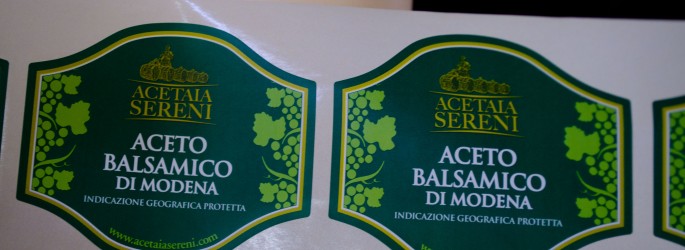
What’s your worst culinary habit? Mine’s pouring copious amounts of balsamic vinegar over anything and everything, so I was interested to find out a bit more about the stuff I’ve been practically drinking out the bottle for most of my adult life.
But despite all my conspicuous consumption of aceto balsamico I didn’t know any of these 10 facts before I visited the Acetaia Sereni balsamic vinegar factory, just outside Modena.
What Does This Post Cover?
1.
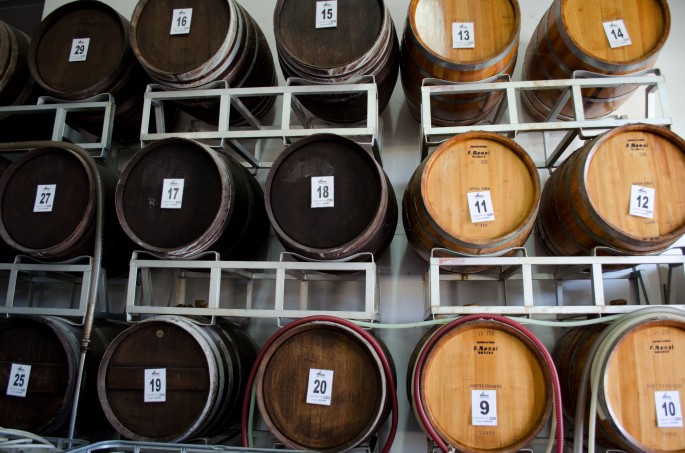
Balsamic is aged in special barrels made of different wood – each type of wood imparts a different taste and even the order in which the vinegar is moved from barrel to barrel impacts the final flavour.
2.
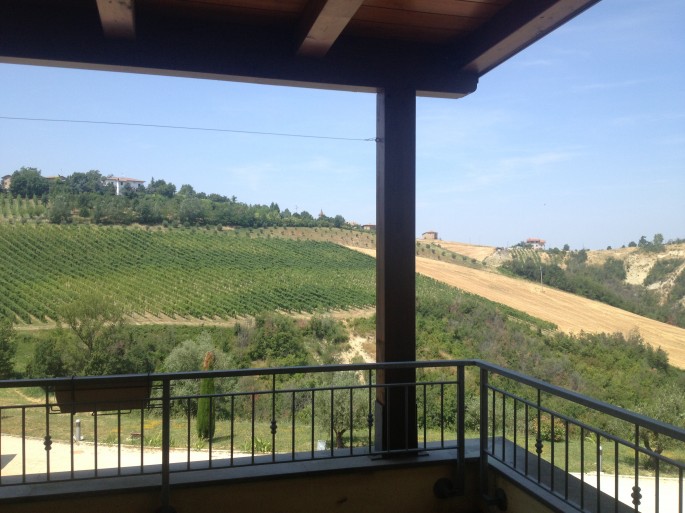
To make balsamic vinegar grapes are harvested between 2nd and 4th week of September, squeezed, boiled at 80-90 degrees for 24 hours, then the final 10% or so of sediment is skimmed.
3.
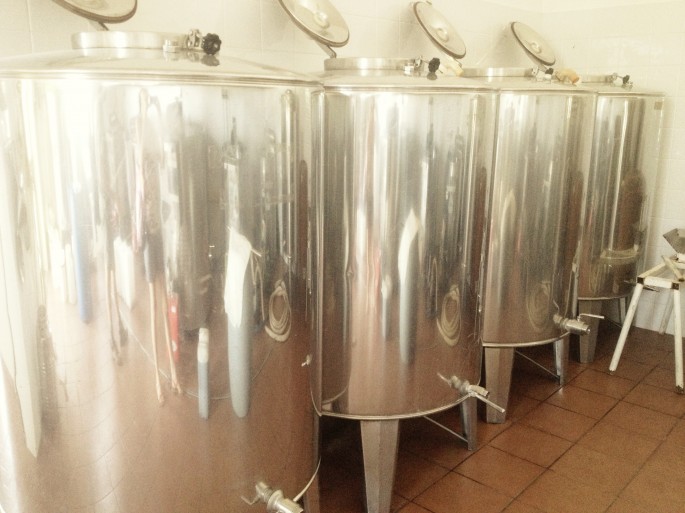
The vinegar spends 2 months in metal containers which are opened to relieve the pressure from fermentation from time to time otherwise they’d probably explode.
4.

Cheaper supermarket ‘balsamic’ is usually up to 30% balsamic, that’s mixed with other vinegars.
5.

The high quality balsamics start their lives in cherry tree (ciliegio) or oak barrels.
6.
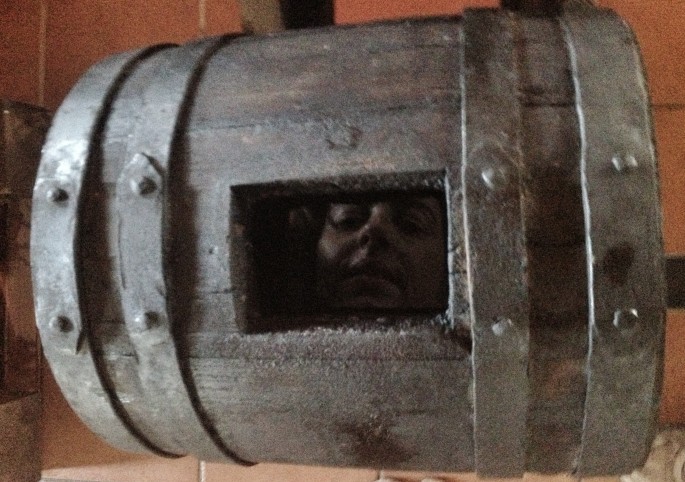
The mirror test – you can tell that a balsamic vinegar is of a high quality if you can see your face in it. I was invited to test this on a barrel of Pre-war vinegar dating back to 1930. The fact that this survived the ravages of the war, and wasn’t looted is attributed to the women, who traditionally worked in the production of balsamic, having secretly buried the best barrels to keep them away from the occupying forces.
7.
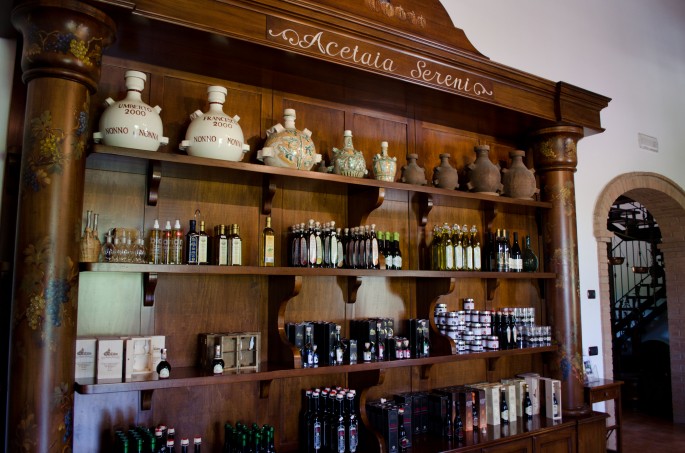
There’s a local tradition to give males a bottle of balsamic at birth, which is then kept for them until they grow up.
8.
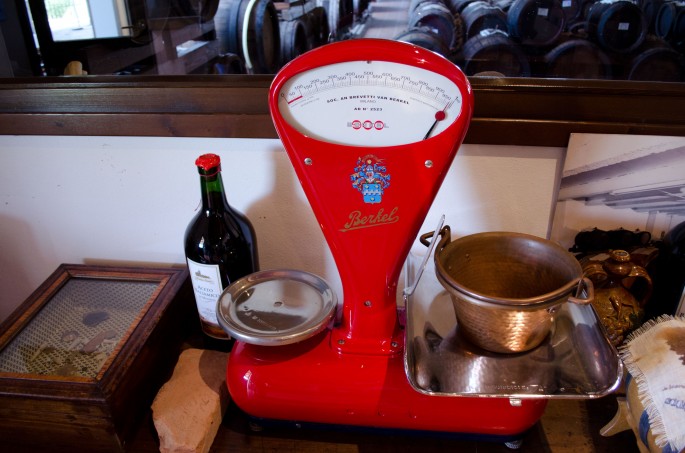
Here in Italy good balsamic is used not just as a condiment but as a medicine to aid digestion, for colds and other health purposes.
9.
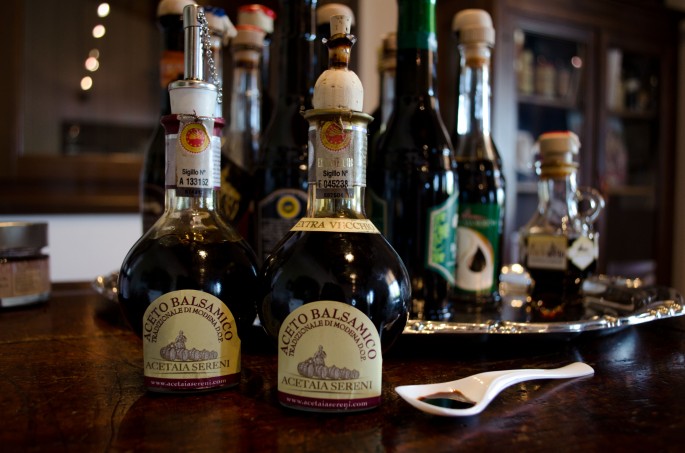
The mark of ‘real’ balsamic vinegar is that it is sold in a bottle which mimics the shape of the barrel on a stand.
10.
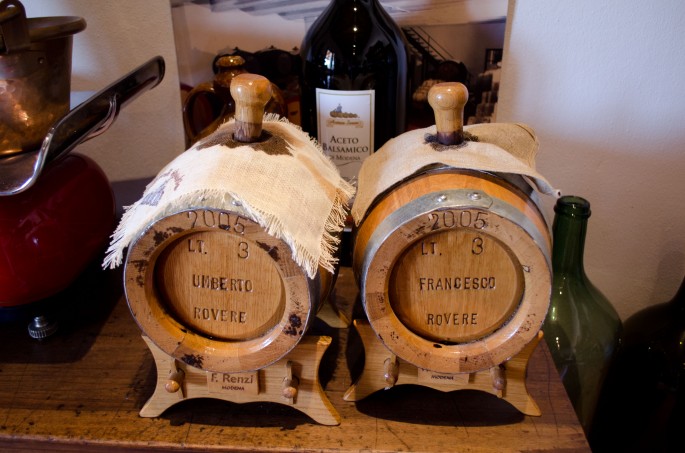
The oldest balsamic you can taste at Acetaia Sereni is 25 years old. It tastes incredible!
With thanks to Julia Montorsi and Pier Luigi Sereni of Acetaia Sereni.




Tags: food, Italian food, Italy
Trackback from your site.
Huggerdad
| #
Be careful this stuff has a sting in the tail. Had two bottles in our kitchen cupboard when we heard a bang. One of the bottles had exploded and it made a real mess. I would suggest you open the bottle and take some vinegar out. This should stop pressure build up in the bottle.
Reply
Jaillan Yehia
| #
Oh no! – I’ve seen that happen with Elderflower cordial but not with vinegar, I suppose the pressure build up / fermentation makes sense though. Yes be careful indeed!
Reply
15 de julho 2013 | [Portuguese, Portugal] Cycling Italy
| #
[…] 10 Thing you didn’t know about balsamic vinegar […]
Reply
15 Luglio 2013 | Cycling Italy
| #
[…] 10 Thing you didn’t know about balsamic vinegar […]
Reply
Lunedì 15 Luglio 2013 | Cycling Italy
| #
[…] 10 Thing you didn’t know about balsamic vinegar […]
Reply
Renee Soqui
| #
I’ve had a bottle of Modena Balsamic vinegar in my cupboard for about 4 years now. I’ve used about 1/2 of it. The last couple of times I used it, I noticed it had a lot of chunky stuff that looked kind of like brown algae. I needed some today, so I decided to run it thru a strainer and dump the yucky stuff. There was a lot of yucky stuff! What is this? Is it supposed to be there?
Reply
Cam
| #
This is the “mother” of the vinegar. It is caused by the harmless microbes in the vinegar that convert the alcohol to vinegar in the fermenting process. The mother is made up of cellulose and is completely harmless all though it may look yucky. Straining it off as you did is a perfect way to make the vinegar appear more aesthetic. Long story short! Your Modena vinegar is safe to enjoy. 🙂
Reply
Jaillan Yehia
| #
Thanks so much for answering this one 🙂
Reply
Ben
| #
Great post with great information. One small clarification on #6 though. The barrel itself is probably what you meant by pre-war dating 1930 and not the vinegar. If vinegar is stored in the barrels for more than 35 years it will have reduced so much that it would become too thick to remove from the barrel.
Reply
Lord Langley
| #
my son loves what he used to call “volcanic vig-in-her”
Reply
Holiday Addict
| #
I love this! I will quote some random balsamic vinegar facts tonight I think, when my friend and her fella are round for dinner. Oh, and I feel like I actually want to go and pour myself a glass of the good stuff I have in the cupboard right now. I know what you mean about practically drinking it out the bottle!
Reply
BeyondBlighty
| #
You’re right! I didn’t know any of that! It’s weird. We were just talking about Balsamic Vinegar yesterday and I was reliving my trip to Modena!
Reply
Jaillan Yehia
| #
Didn’t know most of that myself before the visit, but the problem is now I’ve tasted the 70 Euro a bottle balsamic vinegars, It’s hard to go back 😉
Reply